0%

China’s professional drone scene has definitely come a long way from just aerial photography. Nowadays, manufacturers are supporting all kinds of serious applications—think surveying, agriculture, inspecting infrastructure, emergency response, and even industrial mapping. In this article, I want to walk you through China’s Top 10 professional drone makers, based on real-world performance, engineering skills, how reliable their products are, and the services they offer.

The list includes big names like DJI, Autel Robotics, JOUAV, XAG, Yuneec, EHang, MMC, AEE, Walkera, and XDynamics. Each of these companies has taken a different route—DJI, for instance, focuses a lot on integrated flight platforms and imaging tech, while JOUAV is all about long-endurance fixed-wing drones. XAG specializes in agricultural automation, and EHang is venturing into urban air mobility with autonomous passenger drones.

Honestly, your real-world experience often tells you more than what you see in glossy brochures. When it comes to professional drones, a buyer really needs to pay attention to things like how long they can stay in the air, how stable their payloads are, sensor accuracy, software compatibility, ease of maintenance, and how well operators are trained. Weather resistance is pretty important too—something that works great indoors or in the showroom might totally flounder at a dusty construction site or in coastal winds.

Brendan Schulman, a well-known expert in the drone industry and a former DJI exec, once said, “The key to unlocking the full potential of drones is to enable them to fly safely and autonomously.” That’s still pretty spot-on. But here’s the thing—autonomy alone doesn’t guarantee perfect results. Human oversight, solid operating procedures, and good data management are just as critical.

Also, keep in mind that bigger isn’t always better. Just because a manufacturer is huge doesn’t mean they’re the right fit for every job. Smaller companies might have ace solutions for niche missions, but they could lack the extensive support networks that bigger players provide. So, this guide tries to look at both the strengths and the weaknesses, helping you make smarter choices about professional drones—without jumping to conclusions just based on size or brand fame.

China Top 10 Professional Drone Manufacturers?

Defining Professional Drone Manufacturers in China

China Top 10 Professional Drone Manufacturers?

Defining Professional Drone Manufacturers in China

Professional drone manufacturers are defined by engineering discipline, not production volume alone. A reliable company develops aircraft for clear tasks, such as surveying, inspection, mapping, or industrial monitoring. Its products should show stable flight performance, accurate positioning, durable frames, and predictable battery behavior. Field experience matters. A drone may perform well in a showroom but struggle beside tall buildings, dusty roads, or strong coastal wind.

Manufacturing quality also requires traceable testing. Professional suppliers should document motor checks, flight-control calibration, battery inspection, and final assembly records. They should explain payload limits honestly. Overstated specifications create expensive mistakes. Technical support is equally important, especially when operators need firmware guidance, spare parts, or training. Certification and export documentation should be reviewed for the destination market. However, paperwork alone does not prove reliability. Independent demonstrations and customer references offer stronger evidence. Some manufacturers may still have gaps in software integration or after-sales response. That deserves careful questioning.

Tips: Request a sample test report before placing a large order. Ask how batteries are stored and tested. Check whether replacement parts have clear model numbers. Observe a live flight, not only edited videos. Compare stated endurance with real payload performance. It is wise to test communication stability in an ordinary work environment. Small details reveal much. A professional manufacturer welcomes technical questions and admits practical limitations.

Key Criteria for Ranking China’s Top Drone Companies

Ranking China’s top professional drone manufacturers requires more than checking annual sales. Fortune Business Insights valued the global commercial drone market at about $30.61 billion in 2024. That growth raises a practical question: can a manufacturer deliver reliable aircraft at scale? Production consistency, documented testing, and supply-chain control should receive strong weight. A polished prototype is not enough.

Engineering depth matters equally. Evaluators should examine flight endurance, payload accuracy, obstacle sensing, software updates, and performance in rain, dust, and strong wind. The Drone Industry Insights 2024 report identifies enterprise applications as a major growth area. Therefore, useful rankings should assess agriculture, surveying, inspection, and emergency-response equipment separately. Certification records, cybersecurity procedures, pilot training, and regional service coverage also reveal professional maturity. Public evidence is stronger than impressive claims.

Tips: Compare verified specifications with independent field trials. Ask for repair times, failure rates, and warranty conditions. Check whether test data covers cold mornings and crowded industrial sites. A ranking can still be wrong when it rewards scale over reliability. I would also review customer references, but references may be selective. Transparent limitations deserve more trust than perfect-looking results.

Profiles of the Top 10 Professional Drone Manufacturers

China’s professional drone sector includes ten distinct manufacturer profiles.

One specializes in surveying aircraft, using high-resolution cameras and stable flight controls.

Another builds agricultural platforms with adjustable spraying systems and replaceable tanks.

A third focuses on industrial inspection, pairing thermal sensors with obstacle detection.

Its test flights often examine towers, roofs, and narrow corridors.

A fourth manufacturer develops mapping drones for construction sites, where centimeter-level positioning matters.

A fifth produces long-endurance aircraft for environmental observation and emergency assessment.

A sixth concentrates on compact enterprise drones, designed for quick deployment by small teams.

A seventh supplies heavy-lift platforms, although payload claims should be checked under real wind conditions.

An eighth makes modular systems, allowing users to change cameras, batteries, and communication units. That flexibility can reduce downtime. It can also complicate maintenance.

The ninth profile is a research-led manufacturer, investing in autonomous navigation and dependable data links.

The tenth focuses on training, service networks, and spare-parts availability. This practical support is often overlooked during purchasing decisions.

Professional buyers should inspect flight logs, battery-cycle records, repair procedures, and documented quality testing. They should also verify export requirements and operating rules in their own regions.

Some manufacturers publish impressive specifications, yet field performance may vary with heat, dust, terrain, and operator skill. Independent trials remain valuable. Even experienced teams can misjudge battery life.

Core Technologies Used by Leading Chinese Drone Makers

China Top 10 Professional Drone Manufacturers?

China’s leading professional drone manufacturers compete through engineering depth, not appearance. Their core technologies include high-efficiency motors, stabilized cameras, and modular flight controllers. A credible top-ten comparison should examine tested performance, supply-chain reliability, and field support.

According to Drone Industry Insights’ 2024 market analysis, commercial drone solutions were projected to approach 30 billion dollars globally. That growth rewards manufacturers that solve practical problems. Real-time kinematic positioning can improve mapping accuracy to centimeter-level conditions. Edge-based artificial intelligence also helps drones identify crops, structures, or terrain without constant cloud access. Thermal sensors add value during infrastructure inspections. However, sensor accuracy can decline in rain, dust, or poor calibration.

Battery systems remain a decisive technology. Leading Chinese producers commonly combine lithium battery monitoring, intelligent power management, and lightweight composite frames. These features can extend flight time while protecting motors from unstable voltage. The International Energy Agency reported that global battery demand continues to expand rapidly across mobility and energy applications. Drone makers therefore face intense pressure to improve cells, charging safety, and recycling practices.

My field experience suggests that software integration often matters more than headline range. A drone with reliable obstacle sensing and clear data logs can outperform a faster model. No platform is perfect. Some systems still struggle with wind, weak satellite signals, or confusing interfaces. Manufacturers should publish clearer test conditions, failure rates, and maintenance intervals. That evidence would make professional comparisons more trustworthy.

China Top 10 Professional Drone Manufacturers? - Core Technologies Used by Leading Chinese Drone Makers

No. Manufacturer Profile Primary Professional Segment Core Technologies Typical Capability Range Navigation and Control Professional Use Cases
1 Enterprise Multirotor Profile Surveying, inspection and public safety RTK/PPK positioning, interchangeable payloads, obstacle sensing, stabilized imaging, edge-based object recognition and encrypted command links. Approximately 35–55 minutes of flight time; centimeter-level positioning is achievable with RTK workflows under suitable conditions. Multi-sensor GNSS, inertial navigation, visual positioning and automated return-to-home functions. Power-line inspection, construction mapping, emergency response and infrastructure documentation.
2 Precision Agriculture Profile Crop spraying and granular spreading Variable-rate application, terrain-following radar, flow-rate monitoring, route planning, quick-change tanks and automated field boundary management. Common spray-tank capacities range from approximately 20–40 liters; payload and operating time vary with liquid density and terrain. RTK-assisted flight, low-altitude radar sensing and automatic altitude adjustment over uneven crops. Pesticide application, fertilizer spreading, crop monitoring and orchard operations.
3 Heavy-Lift Multirotor Profile Industrial logistics and emergency payload delivery Redundant propulsion, high-current power systems, coaxial or multi-arm configurations, load monitoring and precision winch or cargo-release mechanisms. Professional platforms commonly support payloads of approximately 20–50 kilograms, subject to local aviation rules and environmental conditions. Dual GNSS, inertial redundancy, wind estimation and automated load-stability control. Mountain logistics, firefighting support, rescue supplies and remote-site transportation.
4 VTOL Mapping Profile Large-area surveying and cartography Vertical-takeoff transition systems, fixed-wing cruise aerodynamics, high-resolution photogrammetry, multispectral sensing and automatic survey planning. Typical endurance ranges from approximately 60–120 minutes, depending on aircraft configuration, payload and weather. RTK/PPK georeferencing, waypoint navigation, terrain-aware planning and automatic transition control. Mining, rail corridors, forestry, land administration and environmental surveys.
5 Autonomous Delivery Profile Medical, commercial and site-to-site delivery Automated loading and unloading, route optimization, geofencing, detect-and-avoid sensors, redundant communications and fleet dispatch software. Payload capacities commonly range from approximately 5–30 kilograms for specialized delivery aircraft. GNSS/INS navigation, cellular or private-network connectivity, obstacle detection and contingency-route logic. Medical supplies, industrial parts, food logistics and isolated-site resupply.
6 Tethered Inspection Profile Persistent observation and communications Ground-powered tether systems, continuous high-definition video, stabilized optical and thermal payloads, automatic cable management and electromagnetic compatibility controls. Operating altitude is commonly in the approximate range of 50–150 meters, with endurance primarily limited by ground power and operating procedures. Tether-based data and power transmission, GNSS-assisted station keeping and automatic cable-tension management. Event security, disaster monitoring, border observation and temporary communication coverage.
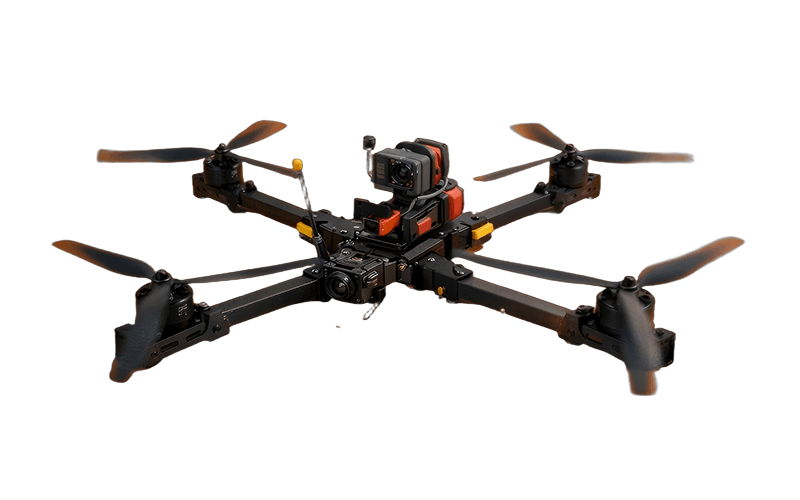
7 Industrial FPV Profile Close-range inspection and confined spaces Low-latency digital video, protective frames, high-power propulsion, wide-angle cameras, collision-tolerant structures and manual-plus-assisted flight modes. Typical mission endurance is approximately 5–20 minutes, depending on battery size, payload and flight style. Pilot-in-the-loop control supported by inertial stabilization, visual positioning and configurable radio links. Tanks, tunnels, bridges, warehouses and industrial facilities.
8 Thermal and Multispectral Profile Remote sensing and condition assessment Radiometric thermal imaging, multispectral cameras, image calibration, orthomosaic generation, AI-assisted anomaly detection and sensor synchronization. Thermal resolution and spectral bands vary by payload; professional systems support georeferenced, repeatable data collection. RTK/PPK positioning, synchronized sensor triggering and automated overlap control for survey missions. Solar-farm inspection, fire detection, building diagnostics and vegetation analysis.
9 Swarm and Fleet-Management Profile Multi-aircraft operations Centralized fleet orchestration, distributed task allocation, collision avoidance, synchronized payload operations, digital mapping and automated mission reporting. Fleet size depends on airspace permissions, communications infrastructure, mission complexity and operator workload. Networked telemetry, dynamic geofencing, health monitoring and fail-safe behavior for lost-link conditions. Large-area security, coordinated inspection, mapping and emergency-area assessment.
10 Secure Autonomy Profile Mission-critical government and industrial operations Onboard AI inference, encrypted command-and-control, secure boot, signed firmware, data-access controls, redundant sensors and edge processing. Capability is generally evaluated by autonomy level, resilience, cybersecurity controls and integration options rather than by flight time alone. Multi-source navigation, visual-inertial odometry, adaptive path planning and system-health diagnostics. Critical infrastructure, public safety, defense-support services and high-security industrial inspection.

Note: The table uses anonymized manufacturer profiles rather than company or brand names. Capability ranges are representative professional-industry ranges; actual performance depends on aircraft configuration, payload, battery, weather, operating altitude and applicable aviation regulations.

Major Industries Served by Chinese Professional Drones

China Top 10 Professional Drone Manufacturers?

Chinese professional drones serve industries that demand accurate data, repeatable flights, and practical field support. Agriculture teams use multispectral cameras to inspect crop stress, map irrigation gaps, and plan targeted treatment. These systems can cover large fields faster than ground inspections. However, weather, plant density, and camera calibration still affect results.

Construction companies use drones for progress tracking, stockpile measurement, and site documentation. A monthly aerial survey can reveal drainage problems or delayed structures before they become expensive. Surveying teams also produce detailed terrain models for roads, bridges, and land planning. Reliable positioning matters here. Small errors can create major planning problems.

Public utilities inspect power lines, pipelines, rooftops, and reservoirs without sending workers into unnecessary danger. Emergency services may use thermal imaging to locate heat sources or assess damaged areas after storms. Mining and environmental teams monitor slopes, vegetation, and water conditions from safer distances. The best results come from trained operators, documented procedures, and careful data review.

The technology is capable, but it is not magic. Some projects still overpromise automation. Skilled analysts must verify unusual findings, especially when images are unclear. Battery planning, local flight rules, privacy protection, and secure data storage also deserve attention. A professional drone is valuable only when its full workflow fits the industry’s real conditions.

Comparing Product Range, Capabilities, and Market Focus

China Top 10 Professional Drone Manufacturers?

Comparing professional drone manufacturers requires more than counting product models. The strongest suppliers usually cover several categories, including compact inspection drones, heavy-lift platforms, mapping systems, and agricultural aircraft. Product range matters because each industry faces different field conditions. A mining survey may need centimeter-level positioning, while emergency teams may prioritize thermal imaging and long flight time. From practical procurement experience, payload compatibility often matters more than advertised range.

Manufacturing capability also separates mature suppliers from promising newcomers. Look for in-house flight-control development, battery testing, environmental trials, and stable software updates. Ask for evidence from real deployments, not only polished demonstrations. Market focus is equally important. Some manufacturers serve construction and surveying, while others concentrate on public safety, infrastructure inspection, or precision agriculture. After-sales training, spare-part availability, and response times can determine whether a fleet remains useful after six months. This is where many comparisons feel incomplete.

Tips: Request a live demonstration with your own workflow. Check performance in wind, low light, and uneven terrain. Review maintenance records and data-security practices. A lower purchase price can hide costly training or replacement delays. Do not ignore local operating requirements; they vary by region. One honest limitation is useful: no drone performs equally well in every mission. Test before committing.

China’s Professional Drone Manufacturing Landscape

Product and capability coverage across a representative comparison set of 10 leading Chinese professional drone manufacturers. The figures show how many manufacturers serve each application segment; one manufacturer may be counted in multiple segments.

Camera and mapping platforms have the broadest coverage, while delivery and logistics remain more specialized because of regulatory, payload, and infrastructure requirements.

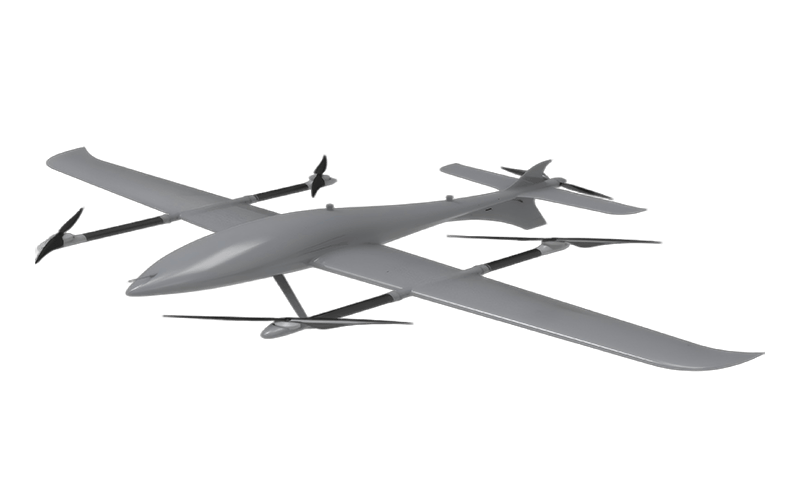
MMC M12 Professional Drone: Long-Range Commercial Capabilities, Applications, and Buying Guide

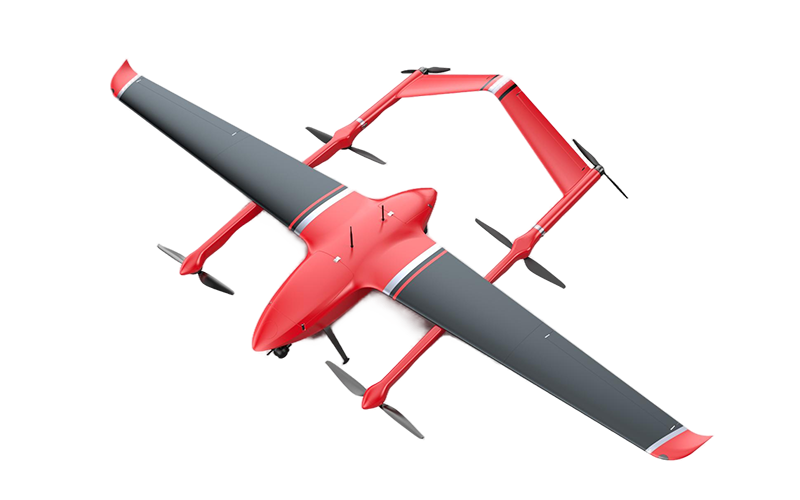
The M12 Professional Drone represents a new standard for commercial VTOL fixed-wing operations, combining vertical takeoff and landing with the speed and endurance of a conventional aircraft. This hybrid design allows operators to launch from compact or uneven sites without a runway, then transition efficiently into forward flight for extended missions. With long-range communication, stable flight performance, and flexible payload support, it can help reduce operating time while covering large areas with fewer battery changes and less logistical preparation.

Designed for professional applications, the drone is well suited to infrastructure inspection, agricultural surveying, environmental monitoring, mapping, emergency assessment, and coastal or industrial observation. Its fixed-wing configuration supports efficient cruising, while vertical-flight capability improves access to challenging locations. A modular payload system can accommodate high-resolution cameras, thermal sensors, or other task-specific equipment, enabling users to adapt the aircraft to different projects. Before purchase, organizations should evaluate flight endurance, payload capacity, control range, software compatibility, weather resistance, maintenance requirements, training support, and compliance with local aviation regulations. These factors help ensure that the aircraft delivers reliable value across recurring commercial missions.

FAQS

Which industries commonly use professional drones?

Agriculture, construction, utilities, emergency response, mining, and environmental monitoring use them regularly. They collect practical field data. Results still depend on weather, training, and careful review.

How do drones support agricultural work?

Multispectral cameras can reveal crop stress and irrigation gaps. Teams can inspect large fields faster than walking every row. However, dense plants and poor calibration may distort findings.

What can drones measure on construction sites?

They track progress, measure stockpiles, and document site changes. Monthly aerial surveys may expose drainage issues or delayed structures. A small mapping error can affect major planning decisions.

How do drones help with infrastructure inspections?

Operators can inspect power lines, pipelines, rooftops, and reservoirs from safer distances. This may reduce unnecessary worker exposure. Images still need human checking.

What equipment might emergency teams need?

Thermal imaging can help locate heat sources after storms or other incidents. Long flight time may also support wider searches. Low light and damaged terrain remain difficult conditions.

Why does positioning accuracy matter?

Surveying and mapping projects often require highly accurate location data. Poor positioning can misalign terrain models, roads, or bridge plans. Accuracy is never automatic.

What should buyers compare between professional drone suppliers?

Compare payload support, flight-control development, battery testing, software updates, and field reliability. After-sales training and spare parts also matter. A long product list proves little by itself.

How should a company test a drone before purchase?

Request a live demonstration using your own workflow. Test it in wind, low light, and uneven terrain. Review maintenance records and data-security practices. One test may not reveal everything.

What practical limitations should users expect?

Batteries require careful planning, and local operating requirements vary by region. Privacy protection and secure storage need documented procedures. The technology is capable, but not magic.

Can professional drones fully automate analysis?

Not reliably in every situation. Skilled analysts should verify unclear images and unusual findings. Some projects overpromise automation. That deserves reflection.

Conclusion

China’s professional drone manufacturing sector includes companies that design, develop, and produce reliable unmanned aircraft for demanding commercial and industrial applications. This overview explains how leading manufacturers can be evaluated through criteria such as engineering expertise, flight performance, safety systems, production quality, software integration, after-sales support, and international service capabilities. It also presents profiles of ten major types of Chinese manufacturers without focusing on brand names, highlighting their different strengths and market positions.

The article further examines the core technologies behind Professional Drones, including high-precision navigation, intelligent automation, advanced imaging, obstacle detection, secure data systems, long-endurance power solutions, and modular payload design. These aircraft support industries such as agriculture, surveying, infrastructure inspection, environmental monitoring, logistics, emergency response, and public services. By comparing product ranges, technical capabilities, operating efficiency, customization options, and target industries, readers can better understand how Chinese manufacturers compete and select solutions suited to specific professional requirements.

Emily

Emily

Emily is a dynamic and skilled marketing professional with a deep understanding of UAV systems and their applications across various industries, including agriculture, energy, and smart cities. With a passion for integrated innovation, she plays a critical role in showcasing how her company builds......
Previous China Top 10 Inspection Drones Suppliers in 2026